Browse

Log in / Register
 Share
Share
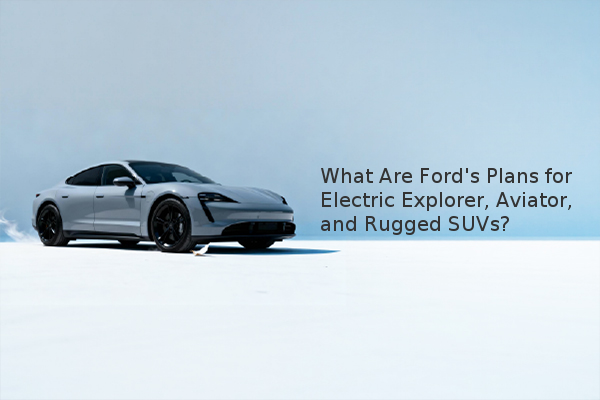
Ford has officially announced the development of two dedicated electric vehicle platforms that will underpin future battery-electric versions of the popular Explorer and Lincoln Aviator three-row SUVs, along with upcoming "rugged SUV" models. This strategic move, revealed during a recent investor meeting by Chief Product Platform and Operations Officer Hau Thai-Tang, signals Ford's accelerated transition toward electrification with a target of 40% global EV sales by 2030. The announcement confirms the automaker's plan to leverage its most successful nameplates for electric transformation.
Ford is developing two distinct dedicated EV architectures to serve different segments of the market. According to the presentation by Hau Thai-Tang, the first platform will be designed for rear-wheel drive and all-wheel drive SUVs. This architecture is expected to provide the foundation for future battery-electric versions of the Ford Explorer and Lincoln Aviator, which are currently related models on an internal combustion engine platform.
The second platform will be a dedicated electric architecture for full-size pickup trucks. This follows the recent launch of the F-150 Lightning, which is built on a modified version of the conventional F-150 platform. The new dedicated truck platform will likely offer greater design flexibility and optimization for electric powertrains. These platforms represent Ford's commitment to "skateboard" architecture—a term describing a flat battery pack mounted low in the chassis with electric motors at the axles, which maximizes interior space and improves vehicle stability.
Based on our assessment experience, dedicated EV platforms typically offer advantages over converted combustion-engine platforms, including longer driving range, improved interior packaging, and enhanced performance characteristics.
The investor meeting provided specific confirmation that electric versions of the Ford Explorer and Lincoln Aviator three-row SUVs are in development. These family-oriented vehicles represent significant volume sellers for Ford, making them strategic choices for electrification. The Explorer and Aviator will likely share the new rear-/all-wheel drive SUV platform, potentially benefiting from economies of scale.
Beyond these confirmed models, the presentation also mentioned "rugged SUVs" as part of the future electric lineup. Automotive News reported that a rendering shown during the presentation bore resemblance to the Ford Bronco, though Thai-Tang suggested this might be coincidental. This follows Ford's pattern of electrifying iconic nameplates, as seen with the Mustang Mach-E and F-150 Lightning.
The transition to electric powertrains for rugged SUVs presents unique engineering challenges, particularly regarding off-road capability, water fording, and thermal management during sustained low-speed operation. How Ford addresses these challenges will be critical to the success of electric variants in this segment.
Ford's platform announcement aligns with CEO Jim Farley's reaffirmed goal for electric vehicles to constitute 40% of Ford's global sales volume by 2030. This aggressive target requires a rapid scaling of EV production across multiple vehicle segments. The strategy appears focused on electrifying proven, high-volume nameplates rather than creating entirely new model lines, potentially reducing market adoption risks.
The company is following a pattern established with the Mustang Mach-E and F-150 Lightning: leveraging established brand equity to accelerate EV adoption. This approach allows Ford to capitalize on consumer familiarity with these models while delivering the benefits of electric propulsion. The platform strategy also suggests a more integrated approach to EV development compared to earlier efforts.
No specific timetable was provided for these future electric models, indicating they are likely in the early or mid-stages of development. The absence of production timelines suggests market introduction is probably several years away, allowing Ford to gradually scale its battery production and manufacturing capabilities.
Ford's announcement places it squarely within the industry-wide transition toward dedicated EV platforms. Competitors like General Motors with its Ultium platform and Volkswagen with the MEB architecture have similar strategies aimed at reducing costs while improving performance. Platform sharing across multiple models has become a key efficiency strategy in the electric vehicle era, much as it was with traditional vehicles.
The focus on electrifying SUVs and trucks reflects market realities, with these segments dominating North American sales. Electric three-row SUVs represent a particularly underserved market segment currently, with only a few competitors like the Rivian R1S and upcoming models from traditional automakers. Ford's move to electrify the Explorer and Aviator positions it to compete in this growing space.
The mention of rugged electric SUVs suggests Ford sees off-road capability as an important future EV segment, potentially competing with electric offerings from Jeep, Rivian, and newcomers like Scout Motors. This diversification within the electric SUV market indicates Ford's comprehensive approach to electrifying its entire lineup rather than focusing solely on passenger cars or compliance vehicles.
Ford's platform strategy represents a significant commitment to electric vehicles that extends beyond current models. By developing dedicated architectures for SUVs and trucks, the automaker is positioning itself for long-term competitiveness in an increasingly electric automotive landscape. While specific timing remains unclear, the confirmation of electric Explorer and Aviator models provides concrete evidence of Ford's electrification direction. Consumers should expect more announcements about Ford's electric vehicle roadmap in the coming years as these platforms move closer to production.