Browse

Log in / Register
 Share
Share
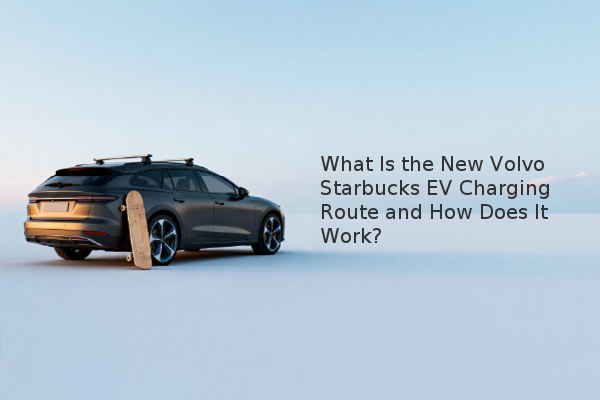
The new Volvo Starbucks EV charging collaboration creates a practical 1,350-mile route from Seattle to Denver, strategically placing DC fast chargers at 15 coffee shops to add significant range during a short stop. This partnership with ChargePoint addresses a key concern for electric vehicle road trips by integrating charging with a natural break.
How Does the Volvo and Starbucks EV Charging Partnership Function?
The network consists of 50 individual ChargePoint DC fast chargers installed at 15 Starbucks locations along the I-90 and I-70 corridors. DC fast charging, or Direct Current fast charging, is a high-powered method that can replenish an EV's battery much faster than standard Level 1 or Level 2 charging. For owners of a model-year 2024 Volvo XC40 Recharge or C40 Recharge, this means the capability to add an estimated 110 miles of range in approximately 15 minutes. This duration aligns perfectly with the time needed to order a coffee and take a brief rest, effectively minimizing downtime on a long journey. The route is designed with stations spaced about 100 miles apart on average, a distance that comfortably fits within the range of most modern EVs.
What is the Route and Its Relevance for an American Road Trip?
Volvo has positioned this route as an exemplar of the classic American road trip. It traverses a scenically diverse path, passing near six national forests and connecting notable landmarks like Washington's Snoqualmie Pass, Idaho's Snake River, and Utah's Arches National Park. The route also includes stops near popular destinations such as Park City, Utah, and Vail, Colorado. Given the varied terrain and potential for inclement weather in the mountains, all-wheel drive (AWD) can be a significant advantage. AWD systems provide power to all four wheels, improving traction and stability. Conveniently, Volvo's current EV lineup offers AWD options. This initiative, while smaller in scale than programs like GM's partnership with Pilot and EVgo, demonstrates a growing trend of automakers collaborating with retail chains to expand charging infrastructure in a user-friendly way.
Is This a Sign of a Broader Trend in EV Infrastructure Development?
The Volvo-Starbucks-ChargePoint model follows a logical blueprint: a vehicle manufacturer, a high-frequency travel stop, and a charging network provider. Based on our assessment experience, such collaborations are likely to become more common as the EV market expands. They offer a sustainable business case for host locations by driving customer foot traffic while solving a critical need for drivers. This raises interesting questions about future partnerships, potentially involving other ubiquitous retail or food service brands. The success of these models will hinge on reliability, ease of use, and strategic placement along major travel routes.
For EV drivers considering a long-distance trip, planning remains essential.
The Volvo Starbucks charging route is a tangible step towards making EV road trips more convenient and predictable, effectively blending necessary vehicle charging with a pleasant consumer experience.