Browse

Log in / Register
 Share
Share
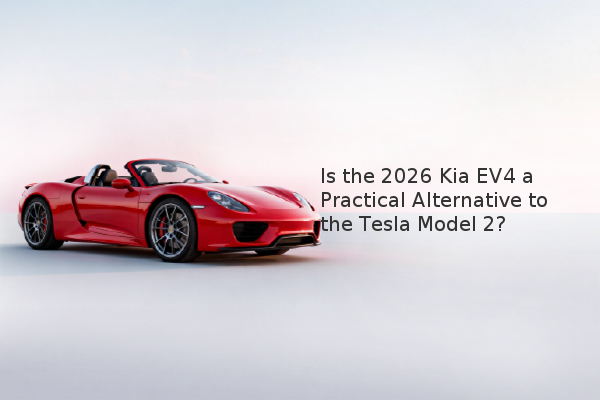
The 2026 Kia EV4 is positioned to be a compelling, mass-market compact electric sedan that could finally deliver on the long-promised, affordable electric vehicle (EV) niche, potentially arriving before Tesla's rumored Model 2. Based on our assessment experience, its success will likely hinge on competitive pricing, but it offers distinctive styling, a front-wheel-drive configuration suited for urban use, and Kia's proven EV technology, albeit with some compromises in rear-seat comfort and charging speed compared to more expensive models.
Debuting at the 2025 New York International Auto Show, the EV4 continues Kia's bold design language. The look is characterized by a mix of curvy panels and sharp, faceted creases, creating a futuristic aesthetic that stands out. From the profile or front-three-quarter view, the design is striking and cohesive. However, the rear-end styling may be more divisive. While it may not be considered conventionally beautiful, the EV4 delivers a distinctive "car of the future" appearance that aligns with models like the EV6 and EV9.
The 2026 Kia EV4 introduces a key departure from other models on the shared E-GMP platform (the global modular platform for electric vehicles used by Kia and Hyundai). It is the first to feature a standard front-wheel-drive (FWD) layout with a single electric motor producing over 200 horsepower. This configuration contrasts with the typical rear-wheel-drive setup found in the Kia EV6 or Hyundai Ioniq 6. For a compact sedan aimed at city driving, FWD can offer better traction in inclement weather.
The EV4 will offer two battery sizes:
| Battery Option | Target Driver | Charging Architecture |
|---|---|---|
| Standard Range | Urban Commuters | 400-Volt System |
| Long Range | Road-Trip Drivers | 400-Volt System |
It's important to note the EV4 utilizes a 400-volt electrical architecture, unlike the faster-charging 800-volt system in the EV6. This means DC fast charging will be slower. For example, an Ioniq 6 with an 800-volt system can charge from 15% to 80% in approximately 16 minutes; the EV4 will require more time. This makes it better suited for owners who primarily charge at home.
A potential drawback is interior space, particularly in the rear seats. Similar to the gasoline-powered Kia K4, the EV4 features a low roofline. Combined with the elevated floor required for the underfloor battery pack, this results in a cramped rear seating area with limited headroom and a knees-up seating position. Front-seat space is more acceptable, though taller drivers may find headroom tight in models with a moonroof.
The cabin itself is familiar and user-friendly. It features large display screens and, crucially, physical硬 buttons (hard buttons) for core functions like climate control and audio volume—a welcome feature that enhances usability while driving. The quality of materials is in line with Kia's recent standards, feeling well-assembled and of good quality. One notable ergonomic flaw, shared with other Kias, is the placement of the climate control screen, which can be partially blocked by the steering wheel.
The ultimate success of the 2026 Kia EV4 will depend heavily on its price point at launch. The electric vehicle market has a significant gap for a truly affordable, mass-market sedan. Tesla has consistently promised but not yet delivered a "Model 2." If Kia can price the EV4 competitively, it could effectively fill this void, arriving around the same time as the next-generation Chevrolet Bolt is expected. It presents a compelling package of style, sufficient performance for its segment, and the backing of Kia's warranty and dealer network.
For potential buyers, the key considerations are: