Browse

Log in / Register
 Share
Share
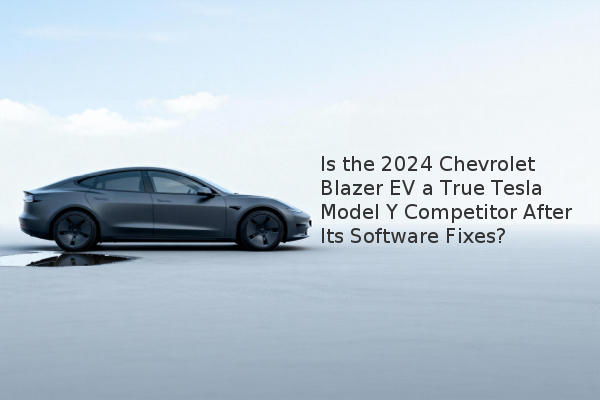
Based on our assessment experience, the 2024 Chevrolet Blazer EV has successfully resolved its early software and production issues, emerging as a compelling, if pricey, contender in the mid-size electric SUV segment. After a slowed rollout, the Blazer EV now delivers on the promise of General Motors' Ultium platform, offering sharp styling and energetic performance, though its efficiency and charging curve present notable caveats for potential buyers.
The 2024 Blazer EV is Chevrolet's first dedicated mid-size electric SUV built on GM's flexible Ultium platform, a set of components including batteries and motors designed for various electric vehicles. Key features across most trims include:
The sporty RS trim we tested emphasizes this tech with unique styling cues and a more premium interior ambiance, positioning it as a direct competitor to popular models like the Tesla Model Y and Ford Mustang Mach-E.
Behind the wheel, the Blazer EV RS feels quick and confident. The instantaneous torque from its electric motors provides strong acceleration for merging and passing. The chassis tuning—how the suspension, brakes, and steering are calibrated for ride and handling—is well-balanced, offering a comfortable ride without feeling overly soft in corners. The steering is precise, making the SUV feel more agile than its size suggests. However, when compared to some rivals, its real-world driving range can dip noticeably during highway driving or in colder weather, which is a common challenge for EVs. The following table compares key specs for the Blazer EV RS with a leading competitor:
| Feature | 2024 Chevrolet Blazer EV RS AWD | Tesla Model Y Long Range AWD |
|---|---|---|
| Horsepower | 288 hp | 384 hp |
| 0-60 mph Acceleration | 6.0 seconds | 4.8 seconds |
| EPA-Estimated Range | 279 miles | 310 miles |
| Starting Price (approx.) | $56,715 | $49,990 |
The most significant potential dealbreaker is the Blazer EV's price point. While well-equipped, the RS trim starts at over $56,000, placing it at a premium compared to key competitors that offer similar or better performance and range. This pricing strategy may challenge its goal of being a "mass-market" alternative to gas-powered vehicles. Furthermore, while the software issues appear resolved, the initial rollout may cause some buyers to approach with caution, waiting for long-term reliability data.
For prospective buyers, we recommend focusing on the total cost of ownership, including potential federal and state EV tax incentives, and comparing real-world range tests from multiple sources beyond the official EPA estimates. The Blazer EV is a stylish and capable electric SUV, but its value proposition hinges heavily on final pricing and individual driving needs.