Browse

Log in / Register
 Share

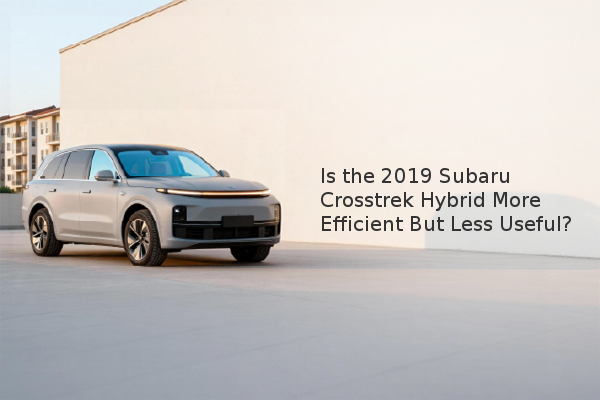
The 2019 Subaru Crosstrek Hybrid offers a smoother and quicker driving experience than the standard model, but its higher price tag and reduced cargo space significantly narrow its appeal for potential buyers.
Based on our assessment experience, the primary trade-off for the Crosstrek Hybrid's improved fuel efficiency and electric-assisted acceleration is a compromise on utility, making it a niche choice within the popular subcompact SUV segment. While it excels in certain areas, it may not be the right fit for everyone.
The most notable improvement in the hybrid model is its refinement. When operating on electric power, the cabin is exceptionally quiet, providing what reviewers describe as a "serene experience." Smooth, calm acceleration is the norm under gentle throttle input. However, the driving dynamics change when more power is demanded.
The hybrid system incorporates electric motors that alter the vehicle's torque profile. Torque is the force that causes rotation and is crucial for acceleration. Subaru claims this electric assistance reduces the 0-60 mph acceleration time by a full second compared to the gas-only model. This makes the hybrid feel noticeably quicker from a standstill, addressing a common critique of the standard Crosstrek. It's important to note that the hybrid is heavier, and this extra weight is most apparent during quick direction changes or cornering, where the car feels less agile.
The core purpose of any hybrid is to improve fuel economy. The 2019 Crosstrek Hybrid achieves this, offering significantly higher MPGe (Miles Per Gallon Equivalent) in electric mode and better combined gas mileage than the standard version. This makes it an excellent choice for city commuters with short daily drives who can maximize electric-only operation.
The main drawback, however, is practicality. The battery pack for the hybrid system is located in the cargo area, which reduces the usable cargo space. For buyers who frequently use their Crosstrek for hauling gear, luggage, or for outdoor activities, this loss of utility is a significant consideration. The higher purchase price also means it will take longer to recoup the extra cost through savings on fuel, compared to the more affordable gas-powered model.
This model is not for everyone. It presents a clear value proposition that will resonate strongly with a specific type of driver.
Conversely, the hybrid is less ideal for adventure-seekers who need maximum cargo space for equipment, budget-conscious shoppers, or those who regularly undertake long highway trips where the hybrid's advantages are less pronounced.
During its time, the Crosstrek Hybrid was ranked among top vehicles but faced stiff competition. It was notably outperformed in overall appeal by the 2020 Kia Telluride, which set a new benchmark for the three-row SUV segment. Other highly-rated competitors included the versatile 2019 Volkswagen Tiguan and the upscale 2019 Mazda CX-5. This competitive landscape highlighted that while the Crosstrek Hybrid was a compelling niche product, mainstream favorites often offered a more balanced package for the average buyer.
In summary, the 2019 Subaru Crosstrek Hybrid is a compelling yet specialized vehicle. Its key strengths are a quieter cabin and quicker acceleration, but these come with the trade-offs of a higher price and less cargo room. For drivers whose priorities align with its specific strengths—particularly city commuting and a preference for refinement—it remains a strong, efficient choice. For those needing maximum space and value, the standard gas-powered Crosstrek or other competitors may be a more practical decision.