Browse

Log in / Register
 Share
Share
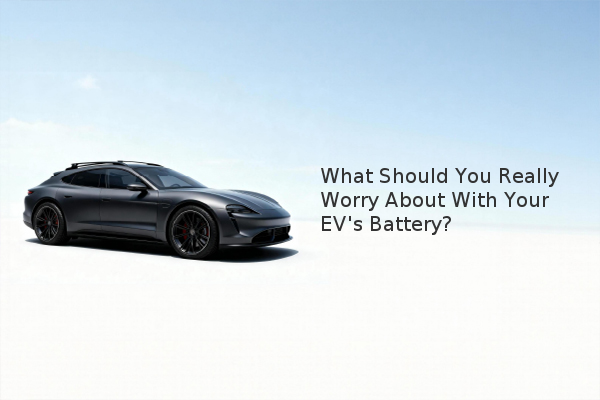
EV battery failure is rare, but gradual range loss over time is guaranteed. The real concerns for shoppers and owners involve how charging habits, climate, and usage patterns affect this inevitable degradation.
Electric vehicle batteries are complex, but for most consumers, the key takeaway is simple: you don't need to worry about the battery suddenly dying. Instead, the legitimate concern is the inevitable, gradual reduction in driving range over the years. Based on our assessment experience and data from industry leaders like Recurrent and Geotab, modern EV batteries are designed for longevity, with degradation typically averaging 1-2% per year. Understanding the factors that influence this rate—and how to mitigate them—is what truly matters for your ownership experience and the car's long-term value.
The prospect of a total battery pack failure is often exaggerated. While the high cost of replacement is a valid concern, actual instances of complete battery death are uncommon. Federal regulations in the United States require a minimum battery and powertrain warranty of 8 years or 100,000 miles, which provides significant protection for the original owner. The used-car market's willingness to refurbish and resell conventional engines and transmissions—a cheaper endeavor than battery replacement—suggests that the economic incentive exists to address EV batteries similarly if widespread failure occurred, which it does not. This concern is largely rooted in early anxieties about gas-electric hybrids, which also proved to be reliable over two decades of use. Unless you are purchasing a used EV with an expired warranty or plan to keep a vehicle for several decades, catastrophic battery failure is not a primary issue worth your worry.
All rechargeable batteries lose capacity with age and use; it's an unavoidable chemical process. Anyone considering an EV must account for this gradual range loss when determining their needs. Early manufacturer estimates were conservative; for example, Nissan once warned that the Leaf might retain only 80% of its capacity after five years. However, real-world data from Recurrent, which monitors thousands of EVs, paints a more optimistic picture.
Their data suggests an initial range drop of 2-3% in the first couple of years, after which degradation levels off to about 1-2% per year. After five years, a 5-10% total range loss is common. Geotab, another data firm, pegs the average annual degradation at 2.3%. This aligns with many manufacturers' warranties that guarantee 70% of the original capacity within the warranty period, building in a safety margin. The variability is high, however. Some well-cared-for nine-year-old cars retain nearly all their original range, while others with different usage patterns may show significantly more loss.
Extreme cold and heat impact EV batteries in different ways, but both lead to reduced range. Cold weather causes a temporary but significant range reduction due to two factors: the battery's chemical efficiency drops in low temperatures, and energy must be diverted to heat the cabin. A AAA study found that at 20 degrees Fahrenheit, the average EV's range can drop by roughly 40% compared to its range at 75 degrees. While preheating the cabin while plugged in can help, the effect is largely unavoidable in winter climates.
High temperatures, on the other hand, can lead to accelerated long-term capacity loss. Batteries operate best at around 70 degrees Fahrenheit. Consistent exposure to heat stresses the battery chemistry. The good news is that most modern EVs feature active thermal management systems (liquid cooling) that mitigate this damage. A comparison of a 2015 Nissan Leaf (which lacked active cooling) and a 2015 Tesla Model S (which had it) is telling: Geotab reported average degradation rates of 4.2% for the Leaf versus 2.3% for the Model S.
Frequent use of DC fast charging (Level 3) can accelerate battery degradation compared to slower home charging. The high voltage and heat generated during fast charging put additional stress on the battery cells. Most manufacturers recommend using DC fast charging "sparingly," though this term is rarely defined with a specific number. The most concrete figure comes from Kia, which attributed an additional 10% degradation over eight years to frequent DC fast charging. This loss would be additive to the normal degradation from age and other factors. For daily use, Level 2 charging at home is the gentlest option for your battery's long-term health.
Fortunately, you have significant control over your battery's health. Modern EVs facilitate these best practices, which are based on mainstream battery science:
When shopping for an EV, focus on the EPA-estimated range and real-world 0-60 mph acceleration times, not the battery's kilowatt-hour (kWh) rating alone. A larger battery in a heavier, less efficient vehicle may not provide more range. By understanding the real factors that affect battery life and following these practical steps, you can maximize your electric vehicle's performance and value for years to come.