Browse

Log in / Register
 Share

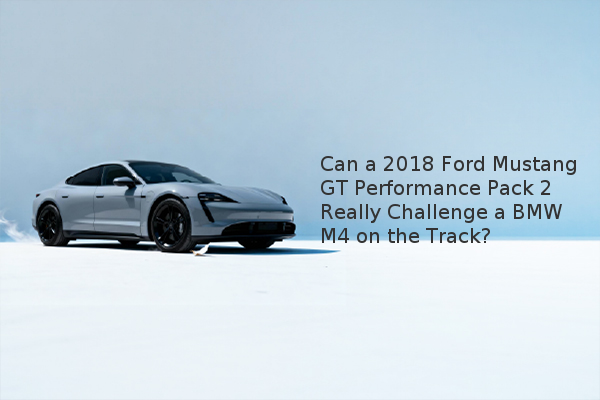
For track day enthusiasts, the 2018 Ford Mustang GT with the Performance Pack Level 2 delivers over 90% of the BMW M4 Competition's driving experience for nearly half the price. While the M4 boasts a premium badge and marginal performance advantages, the Mustang GT proves that accessible, high-performance fun is not exclusive to the German luxury segment. Our assessment experience at GingerMan Raceway confirms that the Ford is a formidable and often more thrilling track-day contender.
On paper, these two sports coupes share remarkable similarities, making them ideal competitors. The BMW M4 Competition features a 3.0-liter twin-turbocharged inline-six engine producing 444 horsepower. It sprints from zero to 60 miles per hour (0-60 mph) in 3.8 seconds and is paired with a seven-speed dual-clutch automatic transmission (DCT), which provides ultra-fast, seamless gear changes. The 2018 Mustang GT, meanwhile, is powered by a naturally aspirated 5.0-liter V8 engine generating 460 horsepower. While its claimed 0-60 mph time is slightly slower at 4.0 seconds, the key differentiator is the price: approximately $46,000 for the Mustang versus $87,000 for the BMW.
| Feature | 2018 BMW M4 Competition | 2018 Ford Mustang GT (PP2) |
|---|---|---|
| Engine | 3.0L Twin-Turbo I6 | 5.0L Naturally Aspirated V8 |
| Horsepower | 444 hp | 460 hp |
| 0-60 mph Time | 3.8 seconds | ~4.0 seconds |
| Transmission | 7-Speed DCT | 6-Speed Manual / 10-Speed Auto |
| Key Package | Competition Package | Performance Pack Level 2 |
| Approx. Price (New) | $87,000 | $46,000 |
Where the specifications converge, the on-track character diverges significantly. The BMW M4's approach is one of clinical precision. Its sophisticated chassis tuning—the adjustment of suspension, brakes, and stability systems—and Michelin Pilot Super Sport tires provide immense grip and predictable behavior. The Ford Mustang GT with the Performance Pack Level 2 (PP2), however, offers a more visceral and engaging experience. The PP2 adds aggressive aerodynamic components, a Torsen limited-slip differential for improved traction out of corners, and massive Michelin Pilot Sport Cup 2 tires that are extremely track-focused. The Mustang’s raw, unassisted steering feel and the exhilarating sound of its V8 engine create a more sensory-rich driving experience, even if its lap times are marginally slower.
The $41,000 price difference is not just about the badge; it's reflected in interior quality and daily refinement. The BMW M4’s cabin is crafted with higher-grade materials, superior sound insulation, and more advanced technology, making it a better grand tourer. The Mustang GT’s interior, while well-equipped, uses more plastics and has a firmer ride on public roads. However, for a dedicated track-day car, these compromises are often acceptable. The Ford’s lower cost of entry also means significantly lower financial risk and potentially cheaper insurance and maintenance costs, allowing owners to invest more in track time and consumables like brake pads and tires.
The choice ultimately depends on your priorities. If your budget is unlimited and you demand peak performance with daily luxury, the BMW M4 Competition is the benchmark. However, for the vast majority of driving enthusiasts, the 2018 Ford Mustang GT with the Performance Pack Level 2 represents an incredible value. It delivers a thrilling, capable, and highly competitive track-day package that makes high-performance driving accessible.
Based on our assessment experience, the Mustang GT PP2 is the smarter financial and emotional choice for a pure track-focused weapon. Its minor performance deficits are far outweighed by its engaging character and the sheer joy of extracting maximum performance from a more affordable platform.