Browse

Log in / Register
 Share
Share

A "Working Central" model is a structured hybrid workplace strategy that designates a primary office as the central hub for collaboration, culture, and key meetings, while allowing for remote work. Based on industry data and our assessment experience, the most effective 2026 strategy balances mandated in-office days for core team functions with flexible remote scheduling, leading to measured improvements in collaboration, employee retention, and operational efficiency.
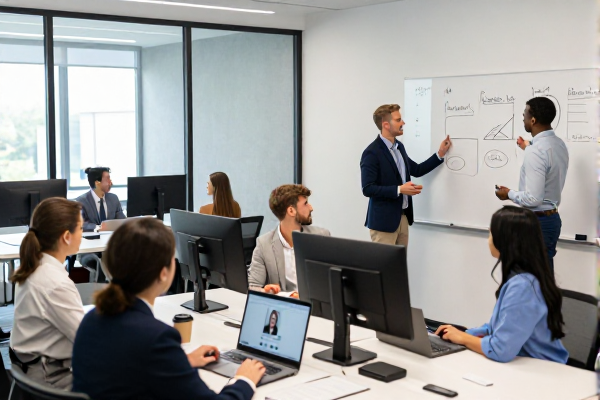
Unlike a fully remote or a rigid full-time office schedule, the Working Central model intentionally designates a primary physical office ("the central hub") as the anchor of company operations. This hub is not for daily attendance by all staff but is optimized for specific, high-value activities that benefit from face-to-face interaction. The core principle is purposeful presence: employees come to the central office for scheduled collaboration, project kick-offs, training, and cultural events, while performing focused individual work remotely. This model directly addresses common hybrid work pitfalls like scheduling conflicts and underutilized real estate by making office time intentional and valuable.
Implementation requires clear policy, technology investment, and managerial training. First, define the "central" mandates. For example, all teams might be required to be in the office every Tuesday and Wednesday for synchronized collaboration. This reduces the uncertainty of "who will be in when" and ensures critical mass for meetings.
Second, reconfigure the central office space. Replace rows of desks with a variety of collaborative spaces, meeting rooms, and quiet pods. The goal is to support the activities that happen there, not to provide a permanent desk for everyone.
Third, equip managers and teams with the right tools. This includes unified communications platforms, cloud-based project management software, and fair practices for engaging both in-room and remote participants during hybrid meetings. Manager training should focus on outcome-based evaluation rather than physical presence tracking.
Success should be tracked through a balanced scorecard of metrics, not just cost savings on real estate. Key Performance Indicators (KPIs) should include:
| Metric Category | Specific Examples |
|---|---|
| Collaboration & Productivity | Project cycle time, cross-departmental project initiation rates. |
| Employee Experience | Employee retention rate, engagement survey scores on "connection" and "resources." |
| Space Utilization | Meeting room usage rates, peak-day office attendance. |
| Talent Acquisition | Offer acceptance rates, quality of hire assessments. |
Regular employee pulse surveys are essential to gauge sentiment on the balance between remote and central work, providing data to adjust the policy.
A major challenge is proximity bias, where in-office employees are unconsciously favored for opportunities over remote colleagues. Mitigate this by documenting goals and performance outcomes transparently and mandating inclusive meeting practices.
Another challenge is varying team needs. A software development team's "central" needs differ from a sales team's. The solution is to set a company-wide baseline (e.g., two anchor days) while allowing department leaders to define additional purposeful in-office gatherings specific to their workflows. Avoid a one-size-fits-all rule applied rigidly across all functions.

The Working Central model is likely to evolve into a hub-and-spoke network for larger organizations, with a main central office supported by smaller regional satellite offices for connectivity. This reduces commute times while maintaining the benefits of a physical gathering point. Furthermore, the role of the central office will increasingly focus on embodying employer brand and fostering innovation through structured serendipity. Investments will shift from square footage to high-quality audiovisual technology and experience design that makes the in-office time undeniably valuable.
In summary, the Working Central model is a deliberate and dynamic strategy, not a default policy. Its success hinges on clear communication, equitable management practices, and a relentless focus on making the central office a magnet for connection, not a mandate of control. Companies that implement it thoughtfully, measure its impact, and remain adaptable will strengthen their culture and competitive advantage in the 2026 talent market.