Browse

Log in / Register
 Share
Share
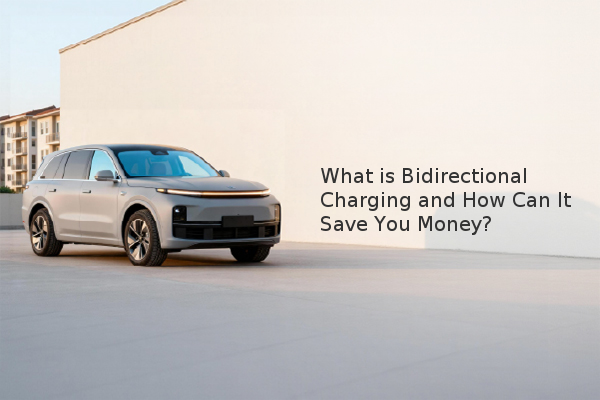
Bidirectional charging allows an electric vehicle (EV) to not only receive power from the grid but also send electricity back out, enabling applications from powering appliances to providing home backup energy. While the concept is gaining traction, its implementation varies significantly, with systems like the newly approved Fermata Energy FE-20 for the Nissan Leaf offering tangible financial benefits, particularly for commercial fleet customers.
At its core, bidirectional charging transforms an EV's high-capacity battery into a mobile energy storage unit. However, not all bidirectional functions are the same. The 120-volt outlet in an EV's cargo area used for a blender is a simple form of Vehicle-to-Load (V2L). More complex systems like Vehicle-to-Home (V2H) and Vehicle-to-Grid (V2G) require specialized, external hardware to safely manage high-power transfer. This distinction is crucial; powering a tailgate party is technologically simpler than providing emergency power to your house during an outage.
The Fermata Energy FE-20 bidirectional charger and V2X platform is a hardware solution installed outside the vehicle. Unlike standard chargers that only pull electricity, the FE-20 contains the necessary components to reverse the flow. It operates by charging the connected Nissan Leaf during off-peak hours when electricity rates are lowest. Then, during periods of high demand and high cost (peak hours), it can discharge the vehicle's stored energy back to the building or the grid. This practice, known as peak shaving, can lead to substantial savings on energy bills. A four-year trial at Nissan's U.S. headquarters using an earlier Fermata model cut nearly $9,500 from their electric bills.
| Feature | Standard EV Charger | Fermata FE-20 Bidirectional Charger |
|---|---|---|
| Power Flow | Grid → Vehicle Only | Grid ↔ Vehicle |
| Primary Use | Charging the EV | Charging + Energy Management |
| Key Benefit | Convenience | Cost Savings / Energy Resilience |
| Typical User | Residential Owners | Commercial Fleets / Businesses |
Based on our assessment, the current value proposition is strongest for commercial and fleet customers. Nissan explicitly markets the FE-20 to its Leaf fleet clients, calling it a "profit center." For a business with multiple vehicles, the ability to strategically charge and discharge an entire fleet can turn a significant expense into a manageable asset. The savings from demand-charge reduction and energy arbitrage can be substantial enough to provide a strong return on investment, something that is more challenging to achieve on a single-family home scale at present.
While systems from Ford's Intelligent Backup Power and GM Energy are bringing V2H capabilities to residential customers, widespread adoption is still evolving. For the average homeowner, the upfront cost of the required hardware must be weighed against the potential benefits. A University of Rochester study suggests residential users might see annual savings of $120 to $150. The more immediate value for homeowners may lie in emergency backup power during outages, using the EV as a whole-home generator, rather than pure financial return.
As the EV ecosystem matures, expect bidirectional charging to become more accessible and affordable for residential users, but for now, its most compelling applications are commercial.