Browse

Log in / Register
 Share
Share
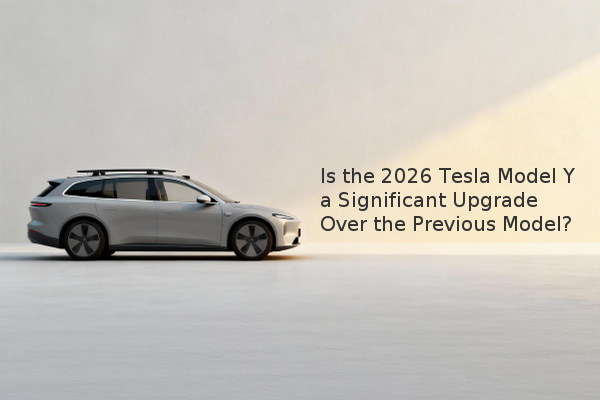
Based on our assessment experience, the 2026 Tesla Model Y is not a compelling reason for current owners to upgrade, as the core driving experience remains largely unchanged from its predecessor despite notable styling and feature updates.
The highly anticipated refresh of Tesla's best-selling electric SUV brings a revised interior, new screen-based controls, and ventilated seats. However, after a two-week evaluation of the Long Range all-wheel-drive version, we found that the fundamental character of the Model Y persists. The ride quality is still firm, rear visibility remains challenging, and key omissions like Apple CarPlay and Android Auto are yet to be addressed. For shoppers cross-shopping rivals like the Hyundai Ioniq 5, the Model Y's strengths continue to be its sporty handling, exceptional efficiency (123 MPGe), and seamless integration with the Tesla Supercharger network.
If you found the previous Model Y's ride too firm, the 2026 model is unlikely to change your mind. The suspension tuning remains on the stiff side, a characteristic that contributes to its sporty handling but can become grating on imperfect roads. Our testing around Chicago's pockmarked streets, especially with the optional 20-inch wheels, revealed a bumpy and almost brittle ride quality. This is a notable area where competitors like the Ioniq 5 deliver a more forgiving and comfortable daily driving experience better suited for an SUV.
While the exterior shape and greenhouse are unchanged, Tesla has added blind spot warning indicators near the side mirrors, offering a marginal improvement in safety.
The blind spot warning indicators are a new feature that places a small red light near the base of the windshield pillars. When a vehicle enters the blind spot, the light activates, though in our experience, its activation sometimes felt delayed. The pinpoint light is subtler than the indicators found in many other vehicles. The fundamental issue of restricted rear visibility, caused by the position and angle of the rear window, remains unaddressed. While the backup camera views are helpful, they are no substitute for clear natural sightlines.
The 2026 update introduces ventilated front seats, a gear selector on the touchscreen, and a rear-seat touchscreen, but it still lacks smartphone integration systems that many buyers expect.
The most significant interior change is the relocation of the gear selector to the central touchscreen, with backup controls on the overhead console. This screen-based gear selector is intuitive and easy to adapt to after a short period. The addition of ventilated front seats is a welcome and practical feature for hot climates. For rear passengers, a new touchscreen on the back of the center console provides climate and entertainment controls.
However, two major omissions persist:
The Model Y continues to be the sports car of electric SUVs, with its nimble handling and strong acceleration setting it apart from more comfort-oriented alternatives like the Ioniq 5.
The driving dynamics are a known quantity and a key differentiator. The dual-motor all-wheel-drive drivetrain provides strong, immediate acceleration. The steering is precise and responsive, making the Model Y feel more like a go-kart than a mid-size SUV. This sporty character comes with trade-offs, including the previously mentioned firm ride and noticeable cabin noise on rough surfaces. The seats, while slightly improved, still feel narrow for some occupants.
For potential buyers choosing between the Model Y and a competitor like the Hyundai Ioniq 5, the decision hinges on priorities:
For current Model Y owners, the updates in the 2026 model are not significant enough to justify the cost of trading in your existing vehicle.
The new Model Y is an evolution, not a revolution. It drives, rides, and operates much like the car you already own. While the interior updates are tasteful and add functionality, the overall experience is not substantially different. Unless there is a specific new feature, such as ventilated seats, that you feel is a must-have, our recommendation is to stick with your current Model Y. The core value proposition remains the same, and the changes do not address the primary criticisms of the previous generation.