Browse

Log in / Register
 Share

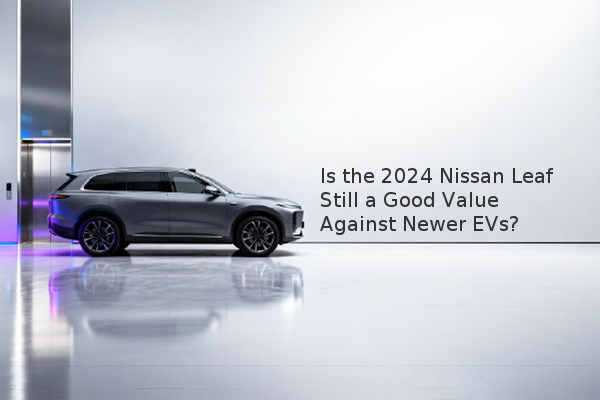
The 2024 Nissan Leaf remains a compelling entry-point into EV ownership, offering a straightforward, affordable package, though its driving range and charging speed are now outpaced by newer competitors. Entering the new model year unchanged from its 2023 refresh, the Leaf provides a familiar and no-fuss electric driving experience starting at $29,235. For drivers considering their first electric car, the Leaf's simplicity and standard safety technology present a strong case, but its value proposition hinges heavily on your driving habits and access to charging.
Nissan continues with a simplified two-trim lineup for 2024. The core specifications highlight the differences between the two models, which are crucial for purchase decisions.
| Feature | Leaf S | Leaf SV Plus |
|---|---|---|
| Starting Price (incl. destination) | $29,235 | $37,285 |
| Battery Size | 40 kWh | 60 kWh |
| EPA-Estimated Range | 149 miles | 212 miles |
| Horsepower | 147 hp | 214 hp |
| DC Fast Charging Capability | Up to 50 kW | Up to 100 kW |
The Leaf S serves as the base model, powered by a 147-horsepower electric motor and a 40-kilowatt-hour (kWh) battery pack. Its EPA-estimated range of 149 miles is suitable for city commuting and daily errands. Standard equipment includes an interior with black cloth upholstery, Apple CarPlay, Android Auto, and the valuable Nissan Safety Shield 360 suite of driver-assistance features.
The Leaf SV Plus addresses the primary limitation of the S trim with its larger 60-kWh battery, boosting the range to an EPA-estimated 212 miles. It also features a more powerful 214-horsepower motor for quicker acceleration. A significant upgrade is its 100-kW DC fast-charging capability, which allows for faster charging sessions compared to the S trim's 50-kW limit. It also adds features like built-in navigation and ProPilot Assist, which combines adaptive cruise control with steering assistance.
Based on our assessment experience, the Leaf's biggest challenge comes from rapid advancements in the EV market. When it first launched, its specs were competitive, but many new rivals offer more range and faster charging for a similar price. Key areas of comparison include:
The 2024 Leaf is not without its merits. Its strengths lie in its simplicity and value-driven approach.
Standout features include:
Primary drawbacks to consider:
The ideal buyer for the 2024 Nissan Leaf is a specific one. This EV represents a solid choice for:
For those who frequently take road trips or lack consistent access to Level 2 charging at home, a newer EV with greater range and faster charging is likely a more practical and satisfying long-term investment.